Hjem / Nyheter / Bransjenyheter / How Does the Trumpf Digital Punch Compare to Traditional Punching Machines in Real Production Costs?
Bransjenyheter
Hjem / Nyheter / Bransjenyheter / How Does the Trumpf Digital Punch Compare to Traditional Punching Machines in Real Production Costs?
How Does the Trumpf Digital Punch Compare to Traditional Punching Machines in Real Production Costs?
The Hidden Cost of "Business as Usual" on a Conventional Punch
Most fabrication shops do not lose money because their punch press is slow. They lose money because the machine sits idle while an operator searches for a tool, because a small part gets sorted into the wrong bin, or because a night shift runs unsupervised and a minor fault compounds into a scrapped sheet. In high-mix, low-volume production environments, these invisible losses accumulate faster than the sticker price of any equipment upgrade.
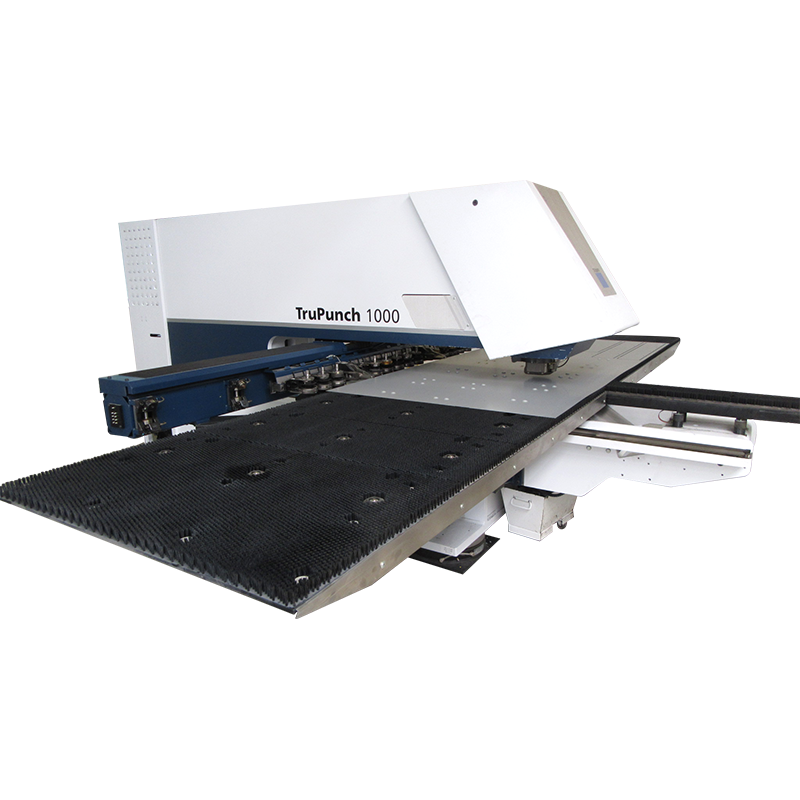
The trumpf digital punch category, particularly machines represented by the TruPunch 5000 platform, is not simply a faster motor or a stronger hydraulic ram. The premium buys a different operational logic: process data becomes visible, tool data becomes portable, and small-part sorting becomes programmable rather than manual.
This analysis breaks down where the money actually goes, using published specifications, third-party pricing signals, and the specific automation modules that distinguish a digital punching workflow from a conventional one.
Key distinction: A conventional punch press sells you a machine. A digital punch sells you a predictable production window.
Data Transparency: From Black Box to Dashboard
On a traditional punching machine, the operator is the sensor. Die wear is judged by sound and experience. A hydraulic drift is noticed only when dimensional accuracy slips. The machine is essentially a black box that produces parts until something breaks.
Digital punching changes the sensing layer. On the current generation of high-end machines, an integrated camera system (Vision Equipment Pro) and a second monitor feed process and status data into a digital service dashboard (Smart View). Operators can view this information from any location and take corrective action before an impending fault becomes a stoppage. Up to ten cameras can capture the work area, allowing setup personnel to verify clamp positions or tool engagement without walking back to the machine.
What This Means for Unattended Shifts
The practical value of this transparency is not diagnostic elegance. It is the ability to run a third shift or a weekend lights-out window with confidence. If the machine can flag a rising hydraulic temperature or a camera can confirm that a part has cleared the die, the shop does not need a skilled operator standing watch. For a job shop paying a night-shift premium, eliminating even one monitored shift per week can change the payback math on the entire machine.
10
Integrated cameras for work-area visibility
Anywhere
Dashboard access for process and status data
Remote
Troubleshooting support without an on-site technician
Setup Speed and Tool Management: The Quiet Profit Leak
Ask a shop manager how long a tool change takes, and the answer is usually the machine cycle time. Ask how long it takes to find the right die, verify its condition, mount it, measure the first part, and adjust the program, and the answer becomes a range: "depends on who is working." That range is the hidden cost.
Digital tool management attacks this variability. A system like Equipment Manager Punch uses scanned QR codes and digital inventory data to suggest suitable tool components, transmit measurement data directly to the machine, and track wear based on actual usage history rather than operator guesswork. The setup process shifts from a memory exercise to a guided procedure.
The Tool Changer Display Difference
On the automation side, a linear tool changer with an additional display at the setup station shows operators all necessary tool information in one place. The tool magazine itself can scale to 90 stations, with a change time measured in seconds rather than minutes. The significance is not the raw speed of the changer. It is the ability to perform setup preparation in parallel with the main production time. The machine keeps punching while the next job's tools are staged, measured, and verified.
Setup Activity
Conventional Workflow
Digital Workflow
Tool identification
Manual search, visual inspection
Scan, digital inventory lookup
Data entry
Handwritten notes, memory
Automatic transfer to machine
Wear assessment
Experience-based estimate
Usage-history data
First-part verification
Trial and error
Guided measurement, scan confirmation
If a shop currently spends more than 45 minutes on a typical tooling changeover, the digital workflow's ability to compress that window and overlap preparation with production becomes a direct labor savings. The payback period on the digital tooling module alone can be measured in months rather than years.
Automated Sorting: AI vs. the Sorting Table
Small-part sorting is the least glamorous and most persistent bottleneck in punching. A sheet full of brackets, washers, and small covers comes off the machine, and someone has to pick each piece, identify it, and place it in the correct bin. It is tedious, it is prone to mixing, and it consumes labor that could be doing setup or inspection.
The digital punching platform introduces an AI-supported sorting approach: intelligent cameras detect the position and orientation of small parts, and a robot picks them without any programming work. The operator does not teach the robot part locations. The vision system identifies the parts and directs the gripper.
Where This Matters Most
This capability is particularly relevant for industries producing electronic enclosures, data center rack components, and control cabinet panels. These parts are often small, produced in high variety, and sensitive to surface scratches. Manual handling introduces both labor cost and quality risk. An automated trumpf digital punch configuration with vision-guided sorting removes the human hand from the most repetitive and scratch-prone step in the process.
Vision-guided sorting eliminates manual part identification and bin placement.
The Price Reality: What Does "Digital" Actually Cost?
A serious buyer needs a number, not a slogan. While configured pricing varies significantly by region, automation level, and options, published market signals provide a working range for the high-end digital punching platform.
A base TruPunch 5000 class machine typically starts in the range of $550,000. When configured with a laser module, SheetMaster automation, and the digital tooling and sorting packages discussed above, the delivered price commonly reaches $800,000 to $1,100,000 or more. By comparison, a used or basic conventional punching machine may cost 30 to 50 percent less on the initial invoice.
Where the Premium Pays Back
The gap is recovered through three mechanisms. First, reduced sorting and monitoring labor: one fewer full-time equivalent in a two-shift operation is a six-figure annual figure in most industrialized markets. Second, increased effective run time: digital transparency and automated tool management typically recover 15 to 20 percent of the hours currently lost to setup and unplanned stops. Third, scrap reduction: guided setup and camera verification reduce the first-part and small-batch error rate.
Cost Factor
Conventional Machine
Digital Punch (Configured)
Initial invoice
Baseline
+30% to 50%
Sorting labor
1 to 2 operators per shift
Reduced by AI-assisted picking
Setup variability
Operator-dependent
Guided, data-driven
Unattended capability
Limited
Remote monitoring enabled
Your specific numbers
A note on retrofit options: If the capital budget for a new machine is not available this fiscal year, digital tool management and scanning packages can be retrofitted to existing compatible punching machines. This captures a portion of the setup-accuracy benefit without the full machine investment.
Actual Trumpf digital punch pricing depends on sheet size, tonnage, automation level, and regional configuration. A configured quote against your specific part mix is the only reliable way to evaluate payback.
Frequently Asked Questions
Q1: What is the main difference between a Trumpf digital punch and a conventional punching machine?
The primary difference is not punching speed or force, but data visibility and automation integration. A digital punch transmits process and status data to a dashboard, uses cameras for remote work-area monitoring, and supports AI-assisted small-part sorting. A conventional machine relies on operator observation and manual sorting.
Q2: How much does a TruPunch 5000 cost with automation?
Published market signals place a base machine in the $550,000 range. A fully configured system with laser capability, SheetMaster automation, and digital tooling packages typically reaches $800,000 to $1,100,000 or higher. Final pricing depends on sheet format, tonnage, and specific automation modules.
Q3: Can existing punching machines be upgraded with digital tool management?
Yes. Digital tool management packages, including scan-based tool registration and digital inventory tracking, are available as retrofits for compatible existing machines. This provides a lower-cost entry point into the digital workflow without purchasing a new machine.
Q4: How does AI sorting work on a digital punching machine?
Intelligent cameras detect the position and orientation of small parts remaining in the sheet after punching. A robot arm picks the parts based on vision data without requiring part-specific programming. This replaces manual sorting and reduces the risk of mixed parts or surface scratches.
Q5: Is a digital punch suitable for high-mix, low-volume production?
Yes, and this is where the value proposition is strongest. High-mix production amplifies setup frequency and sorting complexity. Digital tool management reduces setup variability, and AI sorting handles the small-part burden that grows with part variety. The return on investment is typically faster in high-mix environments than in single-part high-volume runs.